Script tags are preserved for export, but are not executed inside the editor canvas.

professor
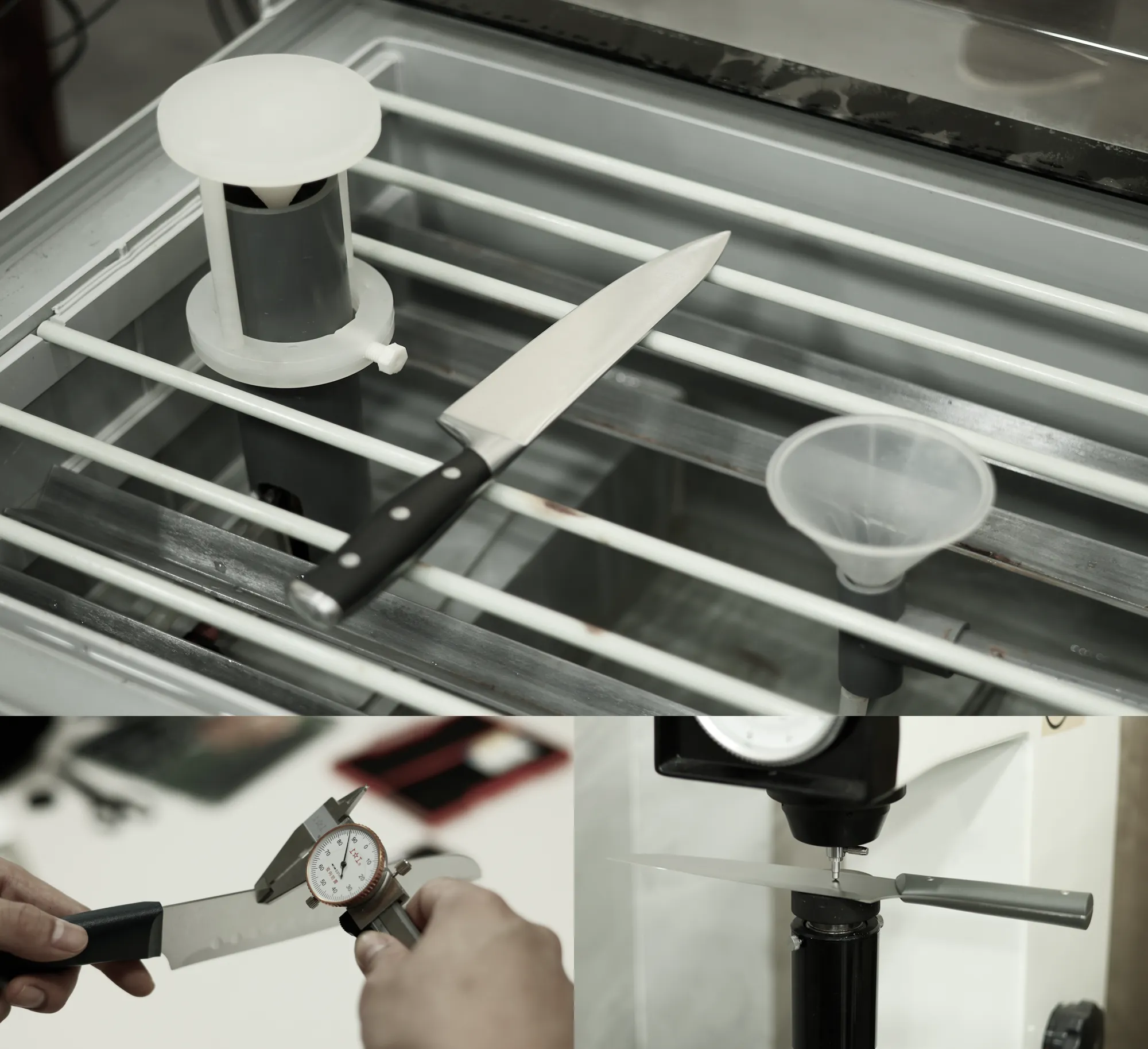
Kitchen knife quality control should begin with the approved specification, not with the final inspection table. For a repeatable OEM program, the buyer and factory need to agree what will be measured, how it will be checked and what will be accepted before mass production begins.
Consistent production starts with clearly defined product specifications. Blade steel, handle materials, colors, and surface finishes need to match the approved requirements.
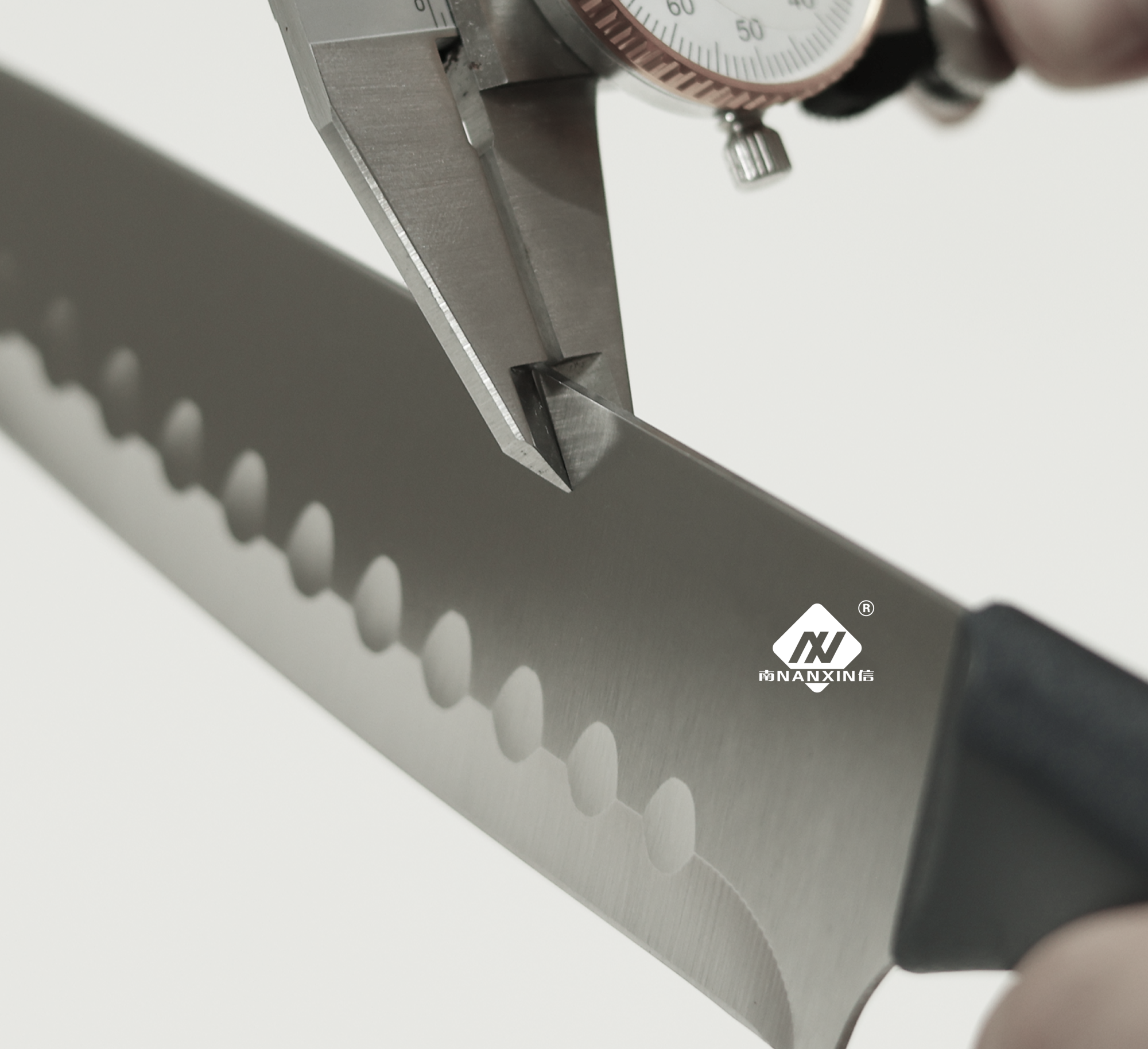
Dimensional accuracy is an important part of kitchen knife quality control. Key measurements typically include overall length, blade length, blade height, spine thickness, handle dimensions, and product weight. Acceptable tolerances vary depending on the product design and manufacturing process.
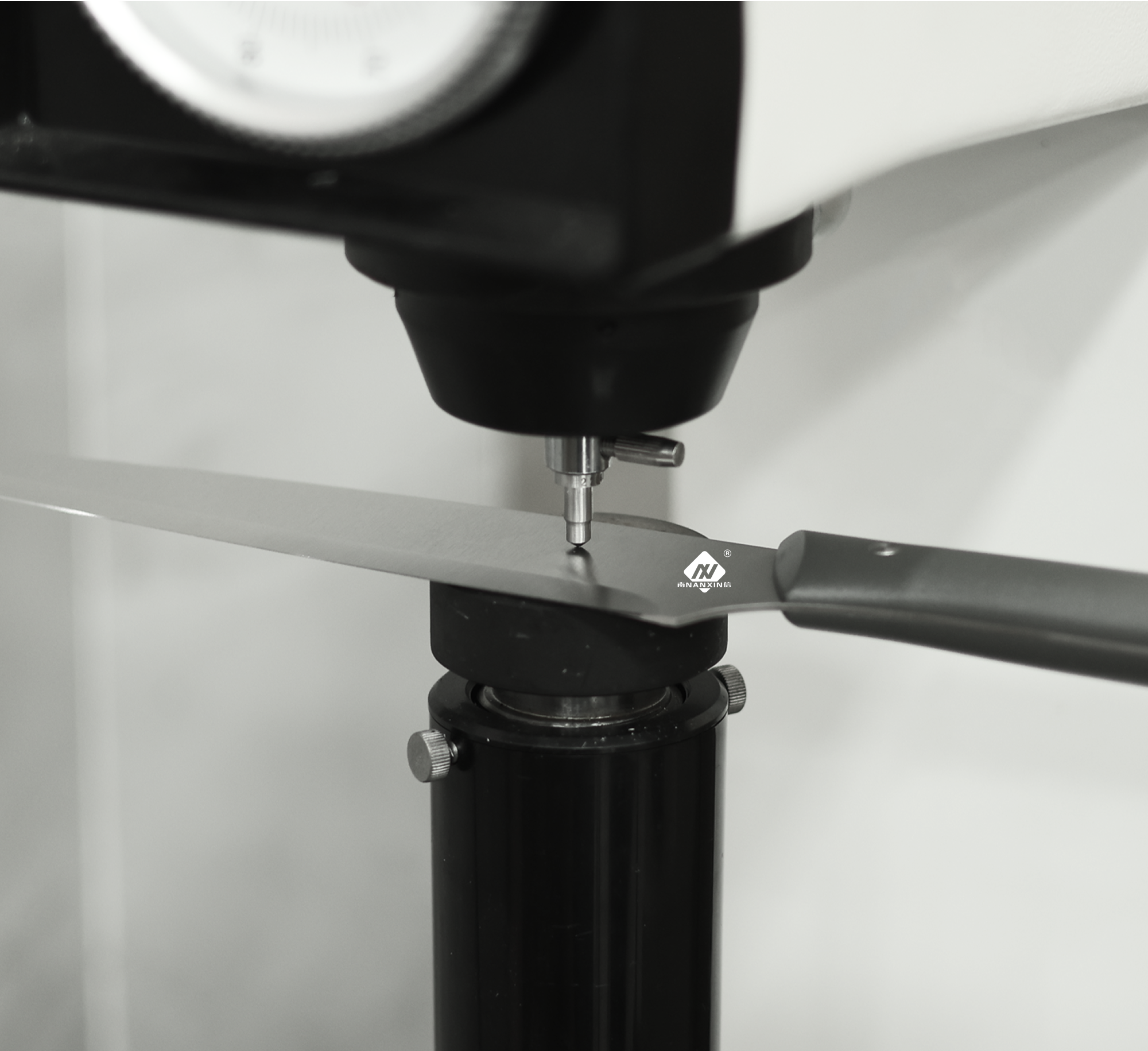
Heat treatment plays an important role in blade performance and durability. The appropriate hardness depends on the steel grade and intended application, with a balance between hardness, toughness, and edge retention.
Consistent heat treatment and hardness testing help maintain reliable performance across production batches.
Blade geometry and surface finish affect both the appearance and functionality of a kitchen knife. Key inspection areas include blade straightness, grinding consistency, tip shape, and surface quality.
For satin, mirror-polished, or coated blades, consistent finishing helps maintain a uniform appearance across production batches.
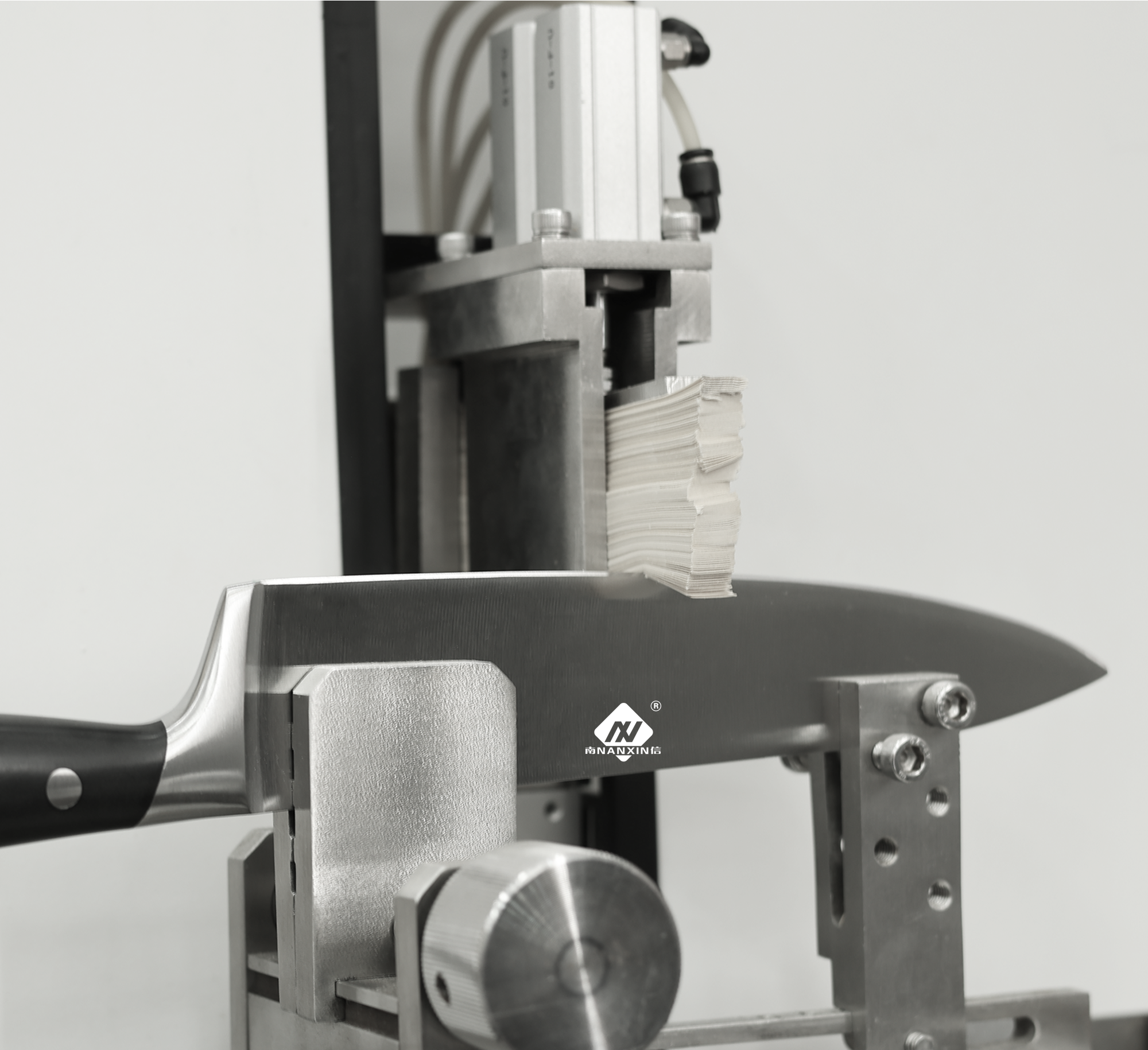
Sharpness is an essential aspect of kitchen knife performance. In mass production, maintaining consistent edge quality across an entire batch is just as important as achieving the desired sharpness.
Different blade types, including plain-edge and serrated knives, may require different sharpening and inspection methods to achieve consistent performance.
Handle inspection can include alignment, gaps, rivets, fasteners, molded appearance, surface finish and any sharp or uncomfortable transitions. The knife should also be checked for cleanliness and structural consistency before it moves to final packaging.
Private-label orders require additional checks for logo position, orientation, size and clarity. Packaging inspection should confirm the correct knife, accessories, printed artwork, labels, barcode, carton quantity and outer-carton marks.
The most effective QC system combines four references: the written specification, the approved sample, the inspection criteria and the approved packaging. When all four are aligned, the production and quality teams can evaluate the same standard throughout the order.
At Nanxin, quality control is integrated throughout the kitchen knife manufacturing process, from production and assembly to final inspection and packaging.
Through clear communication and sample approval, we work closely with our customers to establish quality expectations and maintain consistency throughout production.
Submission successful!
Our sales team will contact you as soon as possible.