Script tags are preserved for export, but are not executed inside the editor canvas.

professor
Stamped and forged kitchen knives are made through different starting processes, but neither construction is automatically better for every market. A stamped blade is cut or blanked from flat steel sheet or strip, while forging shapes heated steel through compressive force before later grinding and finishing. For OEM and private-label kitchen knife projects, the choice between stamped and forged construction depends on factors such as blade design, desired weight, target price range, and production requirements.
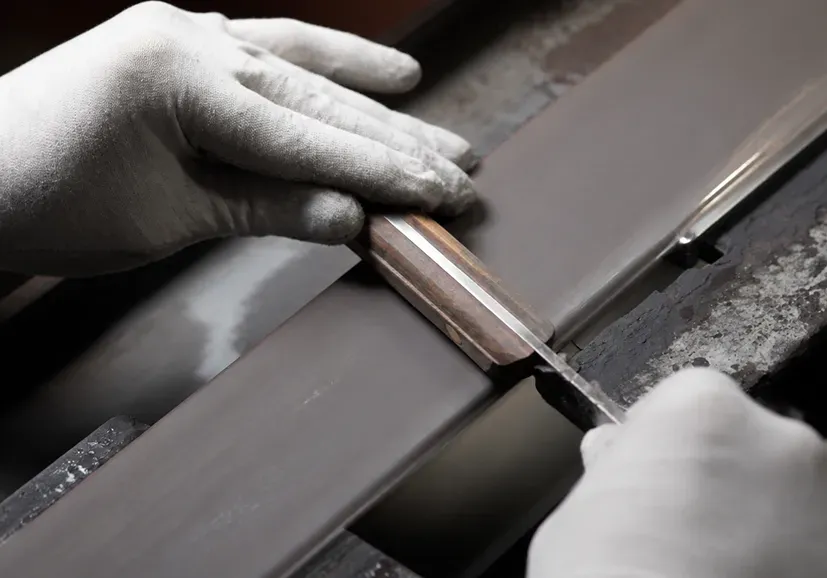
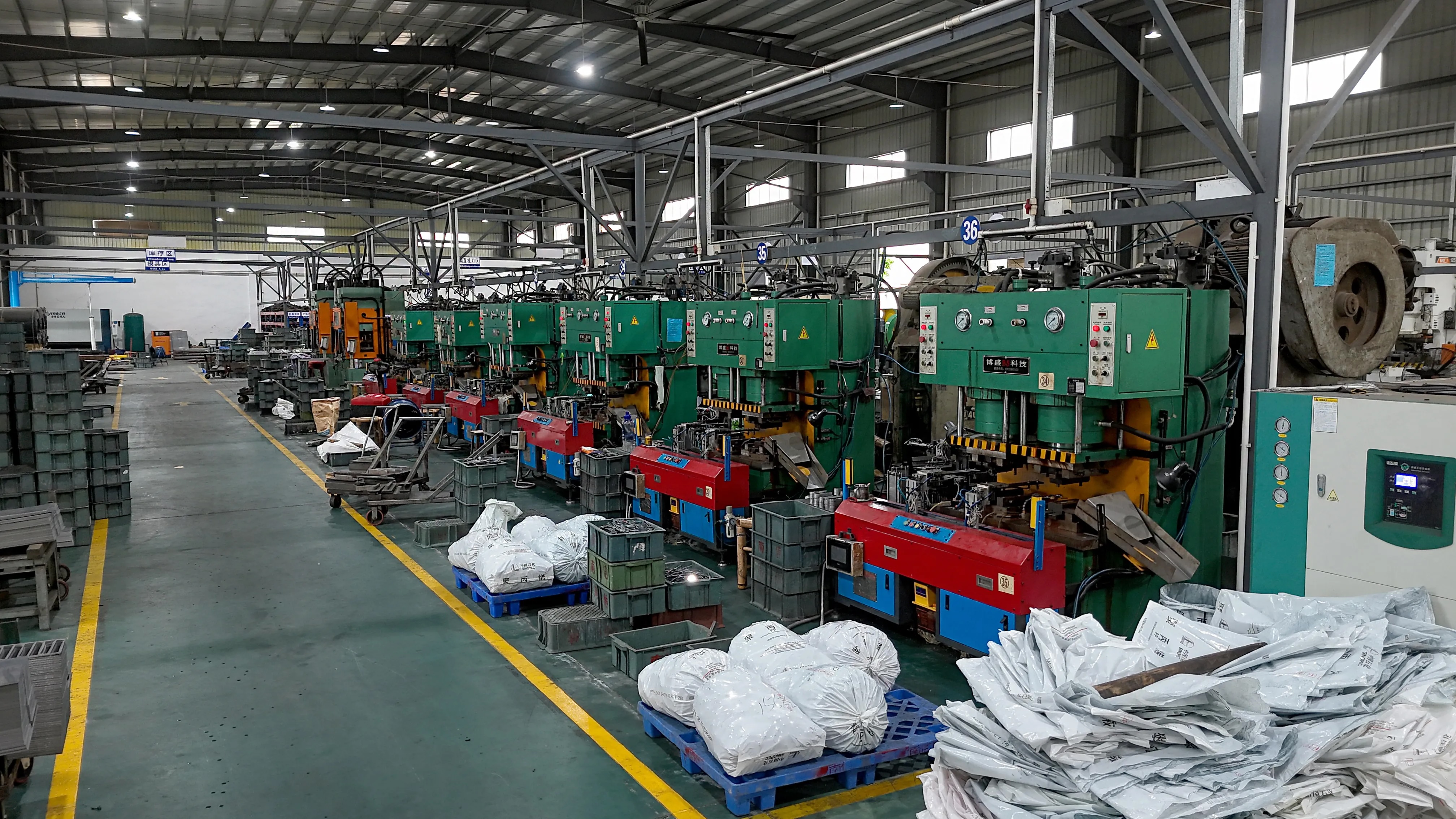
Stamped kitchen knives begin with steel sheet or strip of a controlled thickness. The blade profile is stamped, pressed or laser-cut into a blank before later manufacturing stages such as straightening, heat treatment, grinding, surface finishing and sharpening.
This route can be highly efficient for commercial production and is well suited to lightweight knives, large-volume programs and products where the target price requires tight cost control. Modern stamped knives can still use high-quality steels and precise grinding; 'stamped' describes the forming route, not the final sharpness or quality level.
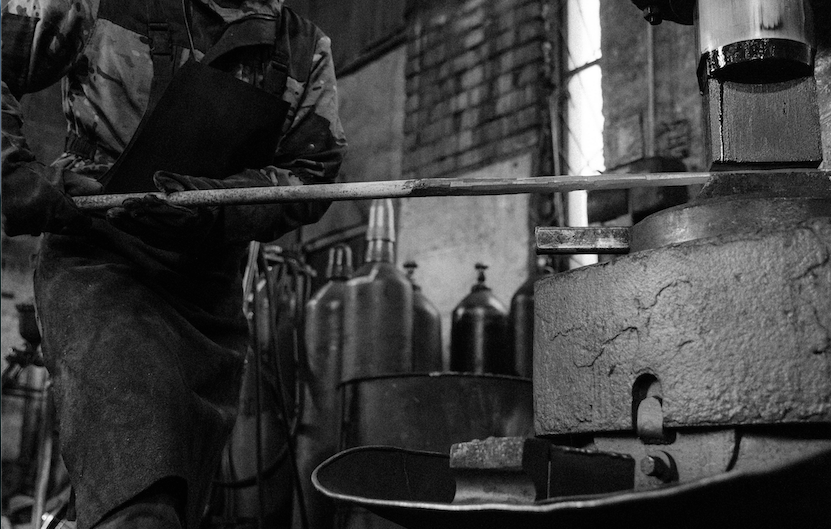
Forging shapes heated steel under compressive force. Depending on the design, forging can create thicker sections or specific geometries before the blank proceeds to heat treatment, grinding, polishing, sharpening and handle assembly.
The process is generally more intensive than simple blanking and is often associated with heavier constructions, integrated or pronounced bolsters and premium positioning. However, those characteristics come from the complete design, not from the word 'forged' alone.
Stamped knives generally offer efficient production, competitive costs, and is often associated with lighter knife designs. Forged knives can accommodate features such as integrated bolsters and different weight distributions, although the manufacturing process is often more complex.
For OEM and private-label projects, the choice depends on product design, target price range, desired weight, production volume, and brand positioning. Both methods can produce high-quality kitchen knives when combined with appropriate materials, manufacturing processes, and quality control.
Not necessarily. Sharpness depends primarily on edge geometry and sharpening quality rather than the manufacturing method. Both stamped and forged knives can achieve excellent sharpness and cutting performance with proper blade design and finishing.
Not necessarily. The manufacturing method does not determine the steel grade or overall quality of a knife. Both stamped and forged knives can use high-quality steel, while their final performance depends on material selection, heat treatment, blade geometry, and finishing.
Stamped construction is often suitable for projects focused on production efficiency and cost control, while forged construction may be preferred for specific blade designs, bolster configurations, or balance requirements.
The most suitable approach depends on the intended product, target market, and brand positioning. For either method, approved samples and clearly defined specifications help ensure consistency throughout mass production.
For OEM and private-label kitchen knife projects, the choice between stamped and forged construction depends on product design, production requirements, target price, and market positioning.
At Nanxin, we work with our customers to explore suitable manufacturing options through product development, sample evaluation, and OEM/ODM manufacturing support.
Submission successful!
Our sales team will contact you as soon as possible.